

Decluttering is the process of going through your belongings and getting rid of things you no longer need, actually use, or want. It’s not the same as tidying up or having a quick clean.
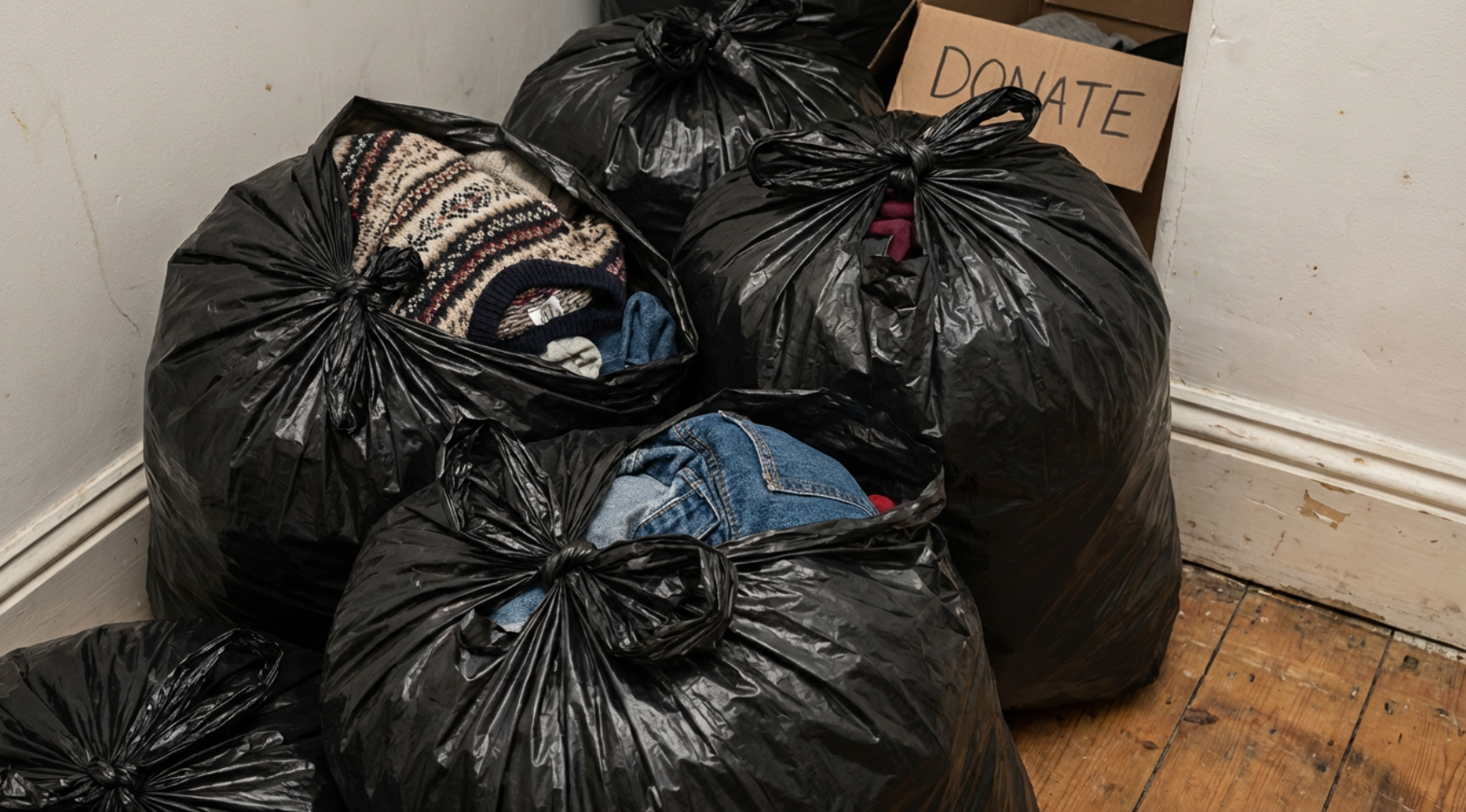
Tidying moves things around. Decluttering removes them.
The goal is to end up with a home that only contains items that serve a purpose or bring genuine value to your life, and to let go of the rest.
The word gets used loosely, but at its core, the decluttering process is about making a decision for every item in your home: does this stay, or does this go? That’s what makes it harder than it sounds.
It’s not physically difficult. It’s emotionally and mentally demanding, because every trinket, piece of clothing, and unopened box in the spare room carries a story, a memory, or a sense of guilt about getting rid of it.
The Difference Between Decluttering and Organising – By Junk Removal Edinburgh Experts
People often use the words interchangeably, but decluttering and organising are not the same thing.
Decluttering is about reducing the number of items you own by getting rid of unnecessary items. Organising is about arranging what’s left so it’s easy to find and use regularly.
If you try to organise a cluttered space without decluttering first, you end up with neatly arranged piles of things you still don’t need. You might buy a divider for your underwear drawer, add a coat stand to the hallway, and label your storage boxes beautifully, but all you’ve really done is given your clutter a nicer home.
The real difference between decluttering and organising is that one reduces volume and the other creates systems in place to manage what remains. You need to declutter and organise in that order, not the other way around.
Once you’ve removed the excess, finding a place for everything becomes straightforward.
Why Clutter Builds Up in the First Place
Nobody sets out to fill their home with things they don’t need. Clutter accumulates gradually, and there are usually a few common reasons behind it.
Buying habits are a big one.
Impulse purchases, sale items, duplicate kitchen gadgets, clothes you no longer wear that still have the tags on. Each item seems harmless on its own, but over months and years they fill drawers, cupboards, and surfaces until there’s barely a kitchen counter or shelf left clear. Stationery drawers overflow. The closet becomes impossible to navigate. Things end up lying around because there’s nowhere left to put them.

Sentimental attachment plays a role too.
We hold onto trinkets, gifts, and keepsakes because letting go feels disrespectful or wasteful, even when the item itself has no usefulness in our daily life.
Children’s artwork, inherited ornaments, souvenirs from holidays you barely remember. The emotional weight of these items makes it hard to let go, so they accumulate in boxes and cupboards, untouched but never discarded.
Then there’s the “just in case” mentality.
Holding onto broken appliances, old cables, mismatched crockery, and clothes three sizes too small because you might need them someday. Most people never do. But the fear of getting rid of something and regretting it later keeps the clutter in place.
How Clutter Affects Your Psychological Well-Being
Clutter isn’t just a visual problem.
It’s a source of stress that affects how you think, feel, and function in your own home. Your brain is constantly processing the visual noise, which drains mental energy without you realising it.
Living in a cluttered environment doesn’t just feel stressful. It physically is.
The positive effects of a less cluttered home are felt both physically and mentally.
A decluttered home means fewer distractions, easier cleaning, and a sense of serenity when you walk through the door.
People who have been through a major declutter often describe it as a weight being lifted, not just from the house, but from their mind. The negative thoughts and low-level anxiety that come with living surrounded by too much stuff begin to fade once the environment changes.
What a Tidy, Decluttered Home Actually Looks Like
A decluttered home isn’t a minimalist show home with bare walls and empty shelves. You don’t need to get rid of everything or live with nothing. A clutter-free home simply means that every item has earned its place.
Your kitchen drawer closes easily because it only contains things you use regularly. The hallway isn’t a pile of shoes, coats, and bags. The spare room is a room, not a dumping ground.
It’s not about perfection.
It’s about having enough free space to live comfortably, find what you need, and enjoy your home instead of feeling overwhelmed by it. A decluttered home is one where you can breathe, where there are fewer things to move, clean around, and trip over.
The Decluttering Movement and Popular Methods to Streamline Your Life
Decluttering has grown from a practical household task into something of a cultural movement.
Books, TV shows, podcasts, and social media accounts dedicated to the subject have turned it into a mainstream topic, and a few methods have become household names.
The KonMari method, developed by Marie Kondo, is probably the most well-known.
It asks you to go through belongings by category rather than room, and to keep only what “sparks joy.” It’s a mindful, emotion-led approach rooted in mindfulness, and it resonated with millions of people worldwide. The usefulness of each item is measured by how it makes you feel, not whether it might come in handy someday.
Other approaches are more straightforward.
The room-by-room method keeps things contained and gives a visible sense of progress.
The four-box method (keep, donate, bin, relocate) forces you to make a decision about every item you touch. For items, like broken glass, remember it needs to be thrown in the regular bin and cannot be recycled.
The “one in, one out” rule helps you streamline your possessions over time by making sure nothing new enters without something old leaving.
None of these methods are right or wrong. The best approach is the one that helps you decide to get rid of what you no longer need and actually follow through.
When People Decide to Declutter, Organise, and Tidy Their Homes
Decluttering rarely happens out of nowhere. There’s almost always a life event or a tipping point that makes someone look around and think “enough.” Common triggers include:
- Moving house
- Bereavement
- A new baby or growing family
- Downsizing or retirement
- A fresh start
Whatever the trigger, the underlying motivation is usually the same.
People want their home to feel calmer, more functional, and more like a space they actually enjoy spending time in. They want to focus on what’s truly important and stop being weighed down by things that no longer serve them.
Letting Go of Clutter: Where the Items Go
One reason people avoid decluttering is that they don’t know what to do with the things they’re getting rid of.
The actual letting go part feels wasteful, especially when items are still in usable condition. But getting rid of things doesn’t have to mean sending them to landfill.
Take them to a charity shop or your local recycling centre.
For bulkier items like old furniture, appliances, mattresses, and things that are difficult to rid of something through normal channels, a professional junk removal service like Junk-It can collect everything in one visit and sort the recycling and donations for you.
Don’t let the logistics of removal become the reason you keep holding onto things.
When the Decluttering Process Needs Professional Help for a Clutter-Free Home
Not every declutter is a weekend project or an easy spring clean. Sometimes the volume of stuff is simply too much for one person, or the situation carries emotional complexity that makes it hard to make a decision about what stays and what goes.
If you found you have too many items or don’t know where to start with your clutter, Junk-It is the team for you.
Whatever the reason for wanting a clutter-free home, we can help get you sorted with our hassle-free and ethical disposal service.
Our team operates through a strict Ethical Waste Disposal Guarantee. This means we always resue what we can, then recycle, and dispose only as our last resort.
To find out more information, contact our friendly team today for a free, no-obligation quote.


